Ways to improve natural assets on a farm Enhance farm dams
Enhancing farm dams can have many benefits for water quality, water security and farm productivity, while also providing habitat for biodiversity.
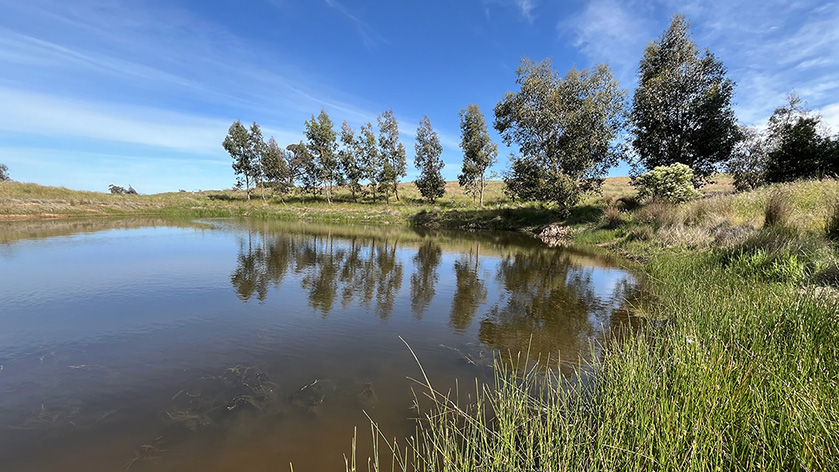


Enhancing farm dams can have many benefits for water quality, water security and farm productivity, while also providing habitat for biodiversity.
Enhanced dams typically have three key features:
When stock have unrestricted access to dams, they often congregate around the water’s edge, contaminating the water with faeces and urine, preventing the growth of vegetation through trampling and grazing, and pugging the edges of the dam.
By fencing a dam to restrict livestock access, the grasses, sedges and rushes around the dam will gradually re-establish. This creates a natural ‘buffer zone’ that helps to filter sediment and nutrients from inflowing water, improving water quality and reducing dam siltation.
Plantings of native trees and shrubs beside a dam will slow wind speeds and help to reduce evaporation from the dam.
Both the improved water quality and vegetation around an enhanced dam also provide habitat for native wildlife – creating a biodiversity hotspot on the farm.
Same property, same day. A typical unfenced dam (L); and an enhanced dam. Bowna NSW, 2019. (Photos: David Smith)


Research by Sustainable Farms, as well as the RMIT Centre for Nature Positive Solutions, has involved monitoring of more than 130 across the sheep-wheat belt of NSW and Victoria.
Researchers investigated:
The studies primarily compared farm dams under two management regimes: control dams (unfenced; livestock with unrestricted access to the water), and enhanced dams (fenced to restrict livestock access; some with terrestrial revegetation).
The results demonstrate the multiple benefits of enhancing farms, including:
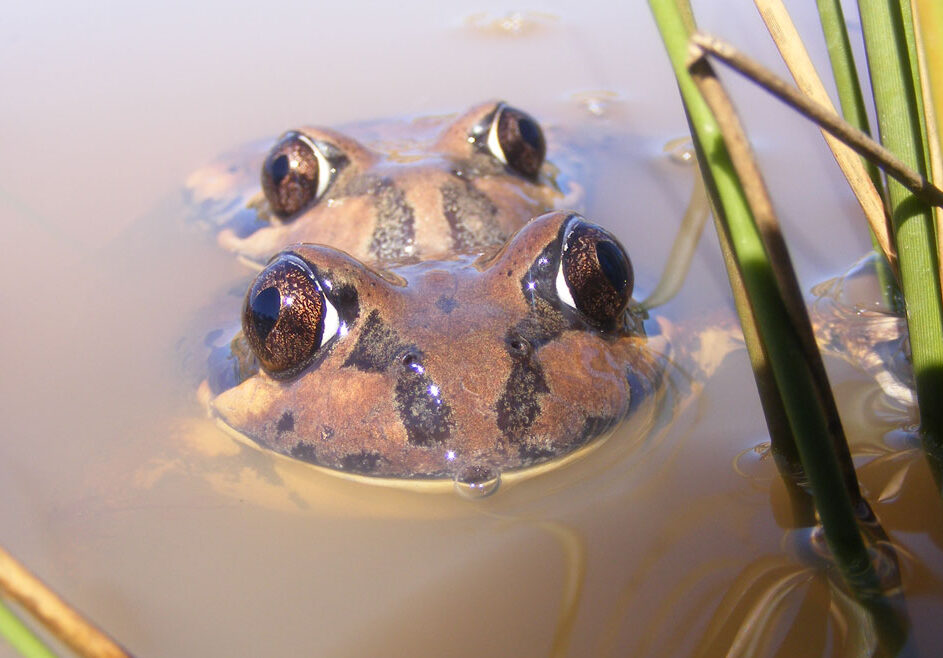
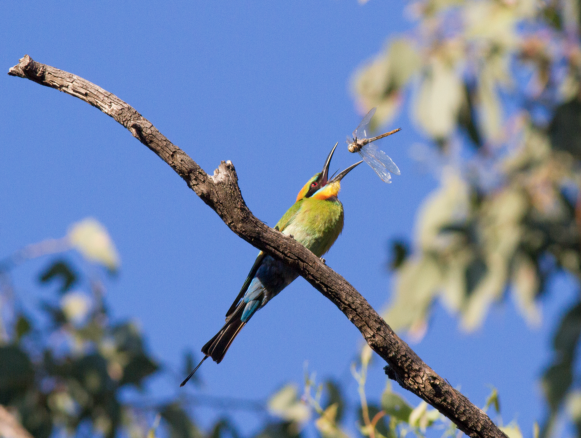
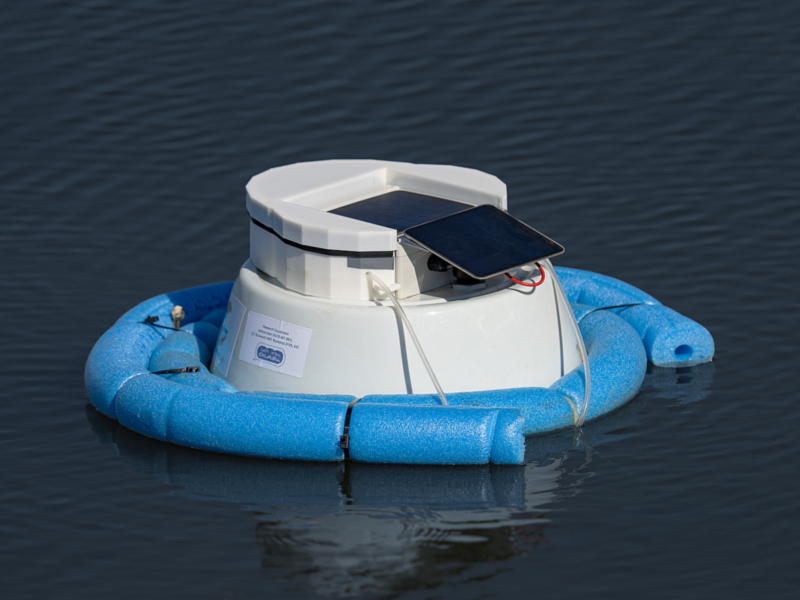
L to R: Cattle at trough (Amber Croft), Giant Banjo Frogs (Mason Crane), Rainbow Bee-eater catches a dragonfly (David Smith), Pondi device for monitoring greenhouse gas emissions (Martino Malerba).
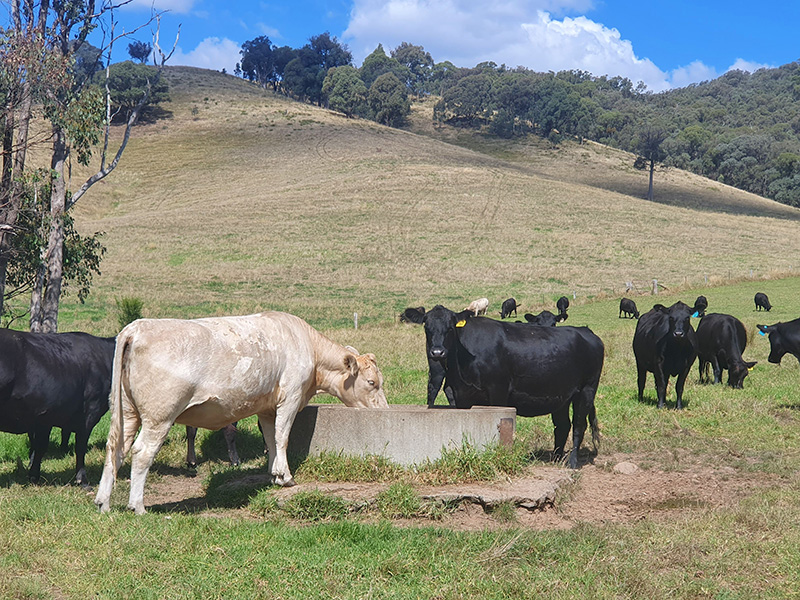
Restricting livestock access reduces trampling, erosion and direct nutrient inputs. This also allows groundcover vegetation to re-establish, forming a buffer zone that filters sediment and nutrients from inflows.
Five years of water quality monitoring showed that enhanced dams had:
Improving water quality has the potential to increase stock productivity. This is because less palatable water leads to reduced water intake and an associated reduction in feed intake by livestock. Stock drinking clean water reticulated to a trough will also be exposed to fewer pathogens that can cause animal health issues, such as liver fluke, worms, toxoplasmosis, coccidiosis, Johne’s disease, blue-green algae toxicity, and other conditions.
Over the past two centuries, landscape modification for agricultural production has resulted in the loss of more than 50% of wetlands across the Murray-Darling Basin, with the remaining wetlands generally degraded. This has led to declines in many species of native wildlife. Research demonstrates that enhanced dams can play a similar role to natural wetlands – helping restore biodiversity by providing much needed wetland habitats for native wildlife.
Enhanced dams provide an abundance of food, shelter and nesting resources for both aquatic and woodland birds.
Evaporation is the principal source of water loss from farm dams.
Farm dams emit greenhouse gases through the anaerobic decomposition of organic matter.

“The fenced dam seems to have the most life around it and all sorts of reeds in it, and it’s really clear. It didn’t go dry in the drought – the dam kept giving, it was good water. We underestimate what an asset good water is to animals’ weight gain and general wellbeing.” Jenny Bell, sheep farmer near Breadalbane, NSW
There are four key steps to enhance a farm dam:
Features of an enhanced farm dam.
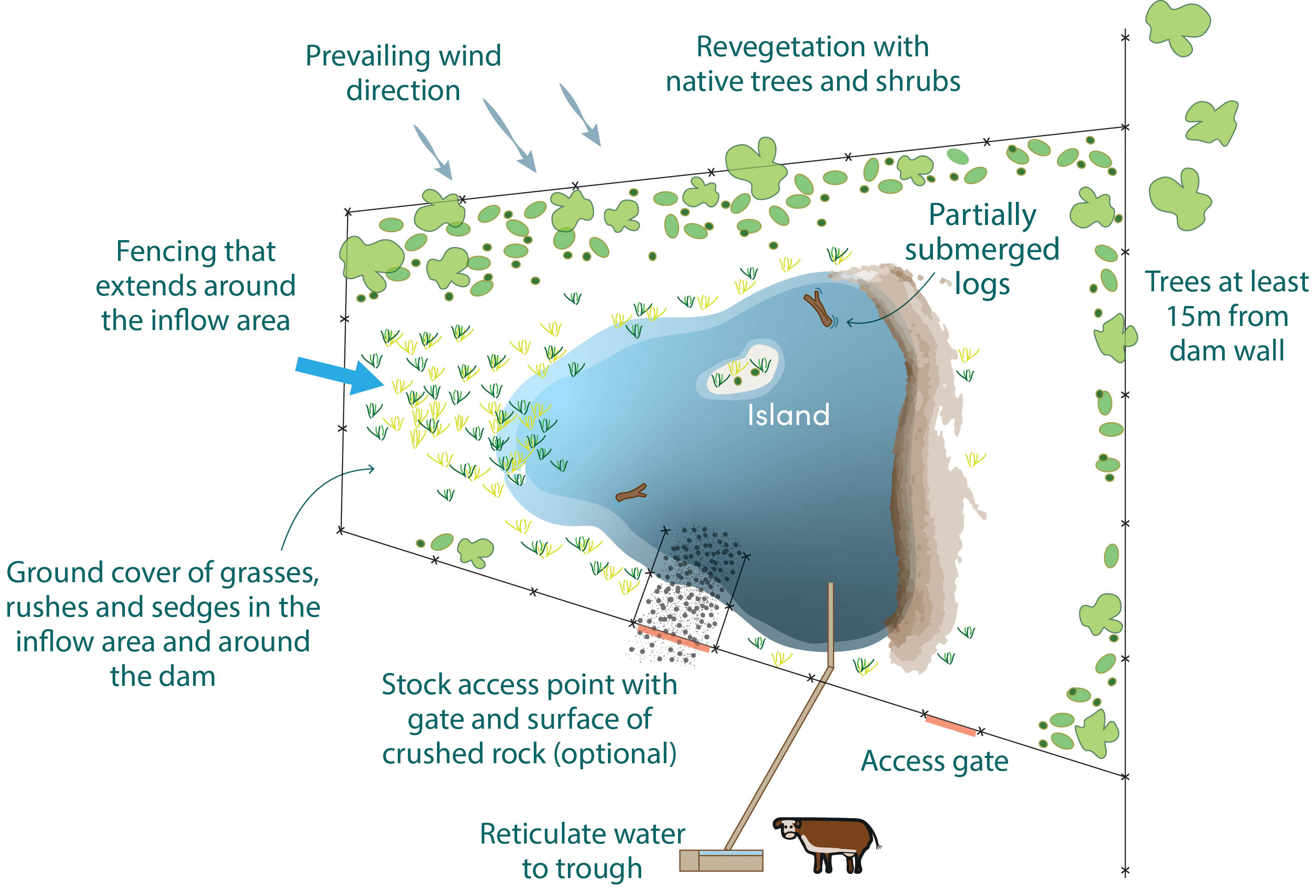
Aim to fence at least 10m back from the high-water mark of the dam. This provides sufficient room for the establishment of grassy groundcover and other vegetation around the dam to filter inflows.
Extend the fence as far around the inflow area as possible, especially areas that remain boggy during wetter months
Include a gate into the fenced area to allow access when needed.
If possible, avoid using barbed wire on fences (particularly the top strand), as gliders and some birds are vulnerable to being caught on barbed wire.
A reticulated water system with troughs is ideal for maintaining water quality for livestock while minimising damage to the area around the dam.
If a backup supply of water is required when troughs can’t be checked, such as when on holidays, creating a gated access point to a dam can provide flexibility by allowing occasional stock access.
Stock access points should be located away from the inflow,
spillway and dam wall, and should lead to a deep part of the dam. Adding a hardened surface of compacted crushed rock is a good way to prevent erosion. Avoid making the access point too wide as this can encourage stock to congregate. A 4–6m wide laneway encourages stock to move away once they have finished drinking.
Aquatic and semi-aquatic plants typically have long-lived seeds and will often re-establish on their own once grazing pressure is removed and water quality improves. Wait for a good wet season to see what naturally regrows, before investing in tubestock.
Revegetation with native trees and shrubs on the windward side of a dam, can reduce evaporative water loss by up to 30%, while also providing important habitat for biodiversity.
Consult with your local Landcare or NRM organisation for a list of plant species that are indigenous to your local area.
Avoid planting trees and shrubs on the dam wall, or in the inflow or spillway areas where they may cause erosion issues.
Shallow areas in a dam enable fringing aquatic vegetation to establish and provide foraging areas for wading birds.
Islands (solid or floating) provide a safe haven for turtles and waterbirds to bask and nest on.
Partially submerged logs or snags provide perches for turtles, frogs and birds above the water, and refuges for aquatic fauna like fish, tadpoles and waterbugs below the water.

What to plant in and around your dam
Native vegetation in and around a farm dam has many benefits for water quality, farm productivity and biodiversity. This brochure provides guidance on the types of plants suitable for revegetating dams, and includes lists of recommended plants.
Read more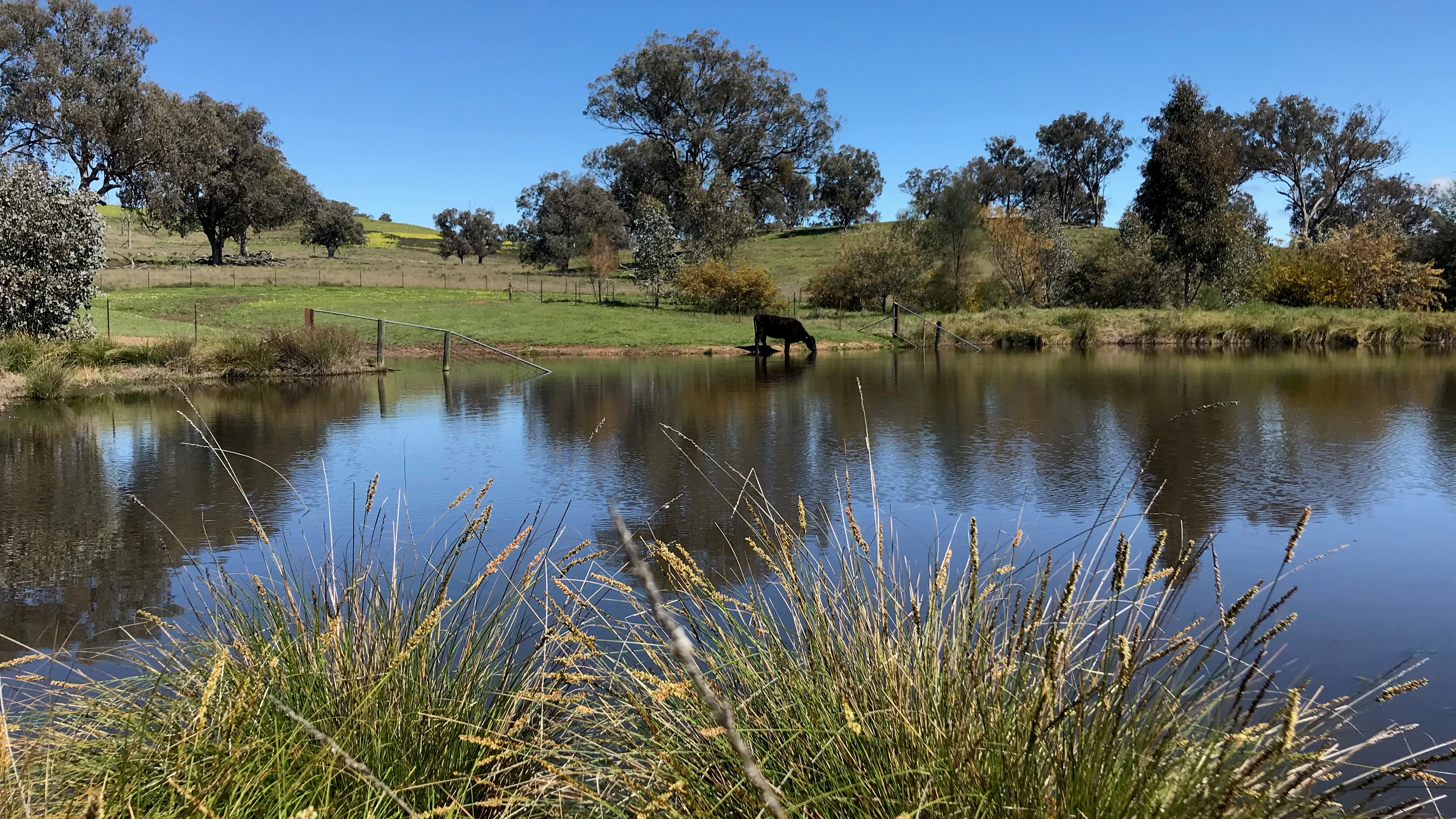
Benefit-cost analysis lends support for improved farm dam management
New Sustainable Farms research looking at the potential net benefits from enhancing farm dams has yielded promising results.
Read more
Improving farm dams: a farmer’s perspective
Marcus Richardson runs a beef property near Albury in NSW. During the drought, he spotted an opportunity to protect some of the farm’s most vital assets – the dams. In this video, he explains why and how he decided to protect and enhance his farm dams for multiple benefits.
Read more